
 ES
ES EN
EN RU
RU SA
SAA semi truck brake chamber converts compressed air from the air brake system into mechanical force to push the brake shoes against the drum. When it fails, you get an air leak, a dragging wheel, or reduced braking power on one axle. The short answer for fleets: inspect at every brake service and replace when pushrod stroke exceeds the limit or the housing shows cracks, rust, or oil leakage.
Content
- 1 What Is a Semi Truck Brake Chamber and How Does It Work?
- 2 How to Spot a Failing Brake Chamber
- 3 How to Choose the Right Semi Truck Brake Chamber
- 4 Replacement Steps at a Glance
- 5 Maintenance and Inspection Best Practices
- 6 What a Brake Chamber Costs and How to Choose a Supplier
- 7 Brake Chamber FAQ
- 8 The Bottom Line
What Is a Semi Truck Brake Chamber and How Does It Work?
A brake chamber is a pneumatic actuator: air pressure pushes a rubber diaphragm, which moves a steel pushrod, which turns the slack adjuster and applies the S-cam brake. It is the component that turns the driver's brake pedal into actual stopping force on a semi truck.
Here is the sequence in normal operation:
- Compressed air from the truck's reservoirs enters the service chamber when the driver presses the brake pedal.
- The air presses against a rubber diaphragm inside the chamber.
- The diaphragm moves a pushrod outward.
- The pushrod rotates the slack adjuster, which turns the camshaft.
- The S-cam spreads the brake shoes against the drum and slows the wheel.
Two main chamber configurations are used on semi trucks:
- Service brake chambers apply the service brakes only. They are simple round chambers with one air port.
- Spring brake chambers, also called combination chambers, contain a service diaphragm and a powerful coil spring. The spring applies the parking and emergency brakes when air pressure is released.
You will also find air inside and air outside port placements, IBV (integral breather valve) versions, and chambers designed for disc rather than drum brakes.
Common Brake Chamber Sizes
The type number stamped on a brake chamber refers to the effective diaphragm area in square inches. Larger areas generate more pushrod force at the same air pressure.
| Type | Effective area | Typical stroke | Common application |
|---|---|---|---|
| Type 9 | 9 sq in | 2.5 in | Light trailer axles |
| Type 12 | 12 sq in | 2.5 to 3 in | Trailer and converter dollies |
| Type 16 | 16 sq in | 2.5 to 3 in | Tandem trailers, light drive axles |
| Type 20 | 20 sq in | 2.5 to 3 in | Standard steering and drive axles |
| Type 24 | 24 sq in | 2.5 to 3 in | Heavy drive axles, severe service |
| Type 30 | 30 sq in | 3 in | Heavy haul and high-force applications |
How to Spot a Failing Brake Chamber
Most brake chamber failures appear as air leaks, excessive pushrod stroke, or visible damage to the housing. Catching them early costs one part and about an hour of labor; missing them can cause brake imbalance, uneven tire wear, or a failed roadside inspection.
Watch for these signs:
- Hissing air near the chamber when the brakes are applied or released.
- Pushrod stroke beyond the adjustment limit, usually 2 inches on a standard chamber.
- Cracked, dented, or rusted housings, especially around the clamp band.
- Oil or moisture dripping from the breather, which points to a failed air compressor or contaminated air system.
- Brake drag on one wheel after releasing the brake pedal.
- A parking brake that will not hold the truck on a modest grade.
- A pushrod that stays extended instead of returning fully.
Brake chambers are wear items. The diaphragm ages, the return spring weakens, and the housing corrodes, especially in regions with heavy road salt.
How to Choose the Right Semi Truck Brake Chamber
To select the correct brake chamber, match the size, stroke, mounting style, air port position, and brake type to the axle you are servicing. Guessing on any of these can produce weak braking or a chamber that fits poorly.
Five things to check before ordering:
- Type number: Usually stamped on the housing. Type 20 and Type 24 cover most tractor drive axles; trailers commonly use Type 16, Type 20, or Type 30 depending on axle rating.
- Stroke: Standard chambers use a 2.5-inch rated stroke; long-stroke chambers use 3 inches. The extra travel keeps the shoes applied as linings wear, so many fleets choose T30 or T24 long-stroke chambers.
- Port orientation: Air inside models route the air line through the back of the chamber; air outside models use a port on the outer face. Match what is on your axle to avoid line-routing problems.
- IBV vs. standard: IBV chambers have an integral breather valve that releases and draws in air as the diaphragm moves. They are common on newer axles.
- Disc or drum: Disc-brake chambers use a different mounting and shorter stroke than drum-brake chambers. Do not interchange them.
If you are replacing a chamber on a standard tractor, a direct replacement such as the FA1070A brake chamber is a common choice because it matches the standard Type 20/24 mounting pattern and pushrod travel used on most drive axles.
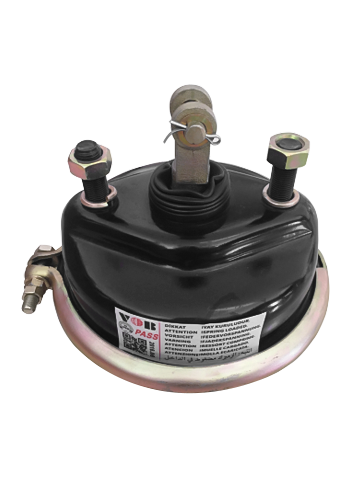 FA1070A BRAKE CHAMBER Suppliers, Factory - ZheJiang VOB Technology CO.,LTD.Zhejiang VOB Technology Co., Ltd is China FA1070A BRAKE CHAMBER Suppliers and FA1070A BRAKE CHAMBER factory.details: FA1070A ...View Product →
Replacement Steps at a Glance
Replacing a semi truck brake chamber takes about an hour per wheel end when you follow a safe, structured sequence: drain the air, support the vehicle, mark the adjustment, swap the chamber, and set the stroke before the first road test.
- Park on level ground, chock the wheels, and drain all air tanks completely.
- Disconnect the air lines and cap them to keep dirt out.
- Mark the pushrod clevis position on the slack adjuster so the new chamber installs at the same effective length.
- Remove the clevis pin and the chamber mounting nuts.
- Pull the old chamber and pushrod assembly off the bracket.
- Install the new chamber with fresh mounting hardware and a new clevis pin.
- Connect the clevis to the slack adjuster at the marked position.
- Reconnect the air lines and bring the system up to pressure.
- Check for leaks with soap solution, measure the stroke, and adjust to spec.
Do not re-use old clamp bands, clevis pins, or mounting nuts. These parts corrode and are cheap compared with the cost of a chamber that works loose on the road.
Maintenance and Inspection Best Practices
A 30-second visual and audible check at every service interval prevents most brake chamber failures and keeps your fleet compliant with brake inspection standards.
- Look for cracks, dents, rust-through, or clamp bands that have shifted.
- Listen for air leaks while the system is fully pressurized.
- Measure pushrod stroke with a brake stroke indicator; replace the chamber if stroke exceeds the manufacturer's recommended reading.
- Verify the chamber releases completely after you take your foot off the brake pedal.
- Check the breather for signs of oil or moisture, which indicate compressor carryover or water in the air system.
- Include brake chambers in the annual inspection, not just when you are replacing brake shoes.
What a Brake Chamber Costs and How to Choose a Supplier
Brake chamber prices generally range from about 40 to 150 dollars depending on type, stroke, and build quality, but the cheapest unit is rarely the least expensive once you add in swapping labor, vehicle downtime, and the safety risk of a roadside failure.
When evaluating a supplier, look for three things:
- Manufacturing control: Stamping, die-casting, CNC machining, and assembly under the same roof mean the supplier controls quality rather than relying on unknown sub-vendors.
- Product range: A supplier that covers service chambers, spring brakes, disc-brake chambers, and both IBV and standard styles makes it easier to standardize parts across a mixed fleet.
- Certification and consistency: Quality management certification and consistent part numbering indicate that the same part ordered twice will be the same part on delivery.
For fleets running mixed tractor and trailer configurations, a supplier with a complete brake chamber product range simplifies sourcing and keeps part numbers consistent across the shop.
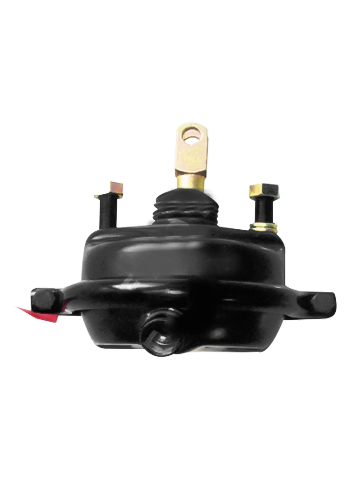 China FAQP Disc Spring Brake Chambers Manufacturers, FactoryAs a China truck spring brake chambers manufacturers and trailer disc brake chambers Factory, Zhejiang VOB Technology Co., Ltd offer FAQP...View Product →
Heavy-haul operators often choose a long-stroke chamber such as the FA1076A T30 brake chamber because the extra half inch of travel keeps the brakes applied correctly as linings wear down.
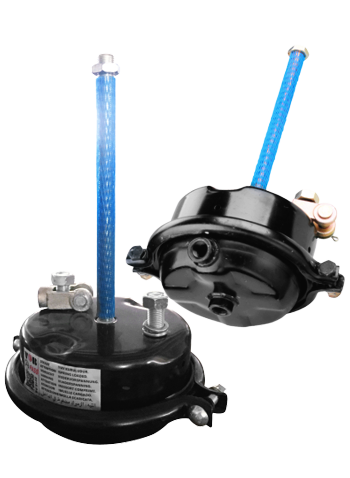 SPARE PARTS FOR SEMI-TRAILER AXLES T30 BRAKE CHAMBER Suppliers, Factory - ZheJiaZhejiang VOB Technology Co., Ltd is China SPARE PARTS FOR SEMI-TRAILER AXLES T30 BRAKE CHAMBER Suppliers and SPARE PARTS FOR SEMI-TRAILER...View Product →
Brake Chamber FAQ
How often should brake chambers be replaced on a semi truck?
There is no fixed mileage interval. Follow the manufacturer's inspection schedule, measure pushrod stroke at every brake service, and replace the chamber when stroke exceeds the limit or when you find leaks, cracks, or oil contamination.
What does the type number on a brake chamber mean?
The type number is the effective diaphragm area in square inches. A Type 30 chamber has a 30-square-inch diaphragm, so it produces more force than a Type 20 chamber at the same air pressure.
Can I rebuild a brake chamber instead of replacing it?
Rebuild kits are available, but most fleets replace the complete chamber. The diaphragm is not the only wear point; the housing, return spring, and pushrod all age, and a full replacement removes uncertainty.
What is the difference between air inside and air outside chambers?
The difference is the location of the air port. Air inside chambers have the port on the rear face, and air outside chambers have it on the outer face. Use the same port style as the axle's air line routing.
Why is my brake chamber leaking air at idle?
A hiss at idle usually means the diaphragm, clamp, or line connection has failed. Apply soapy water to the chamber and fittings to find the exact leak, then replace the chamber or repair the fitting.
The Bottom Line
A semi truck brake chamber is a simple, durable part, but it is also a safety-critical one. It converts air pressure into the mechanical force that stops a loaded truck, so any leak, crack, or excessive stroke should be treated as a repair, not a future task. Inspect regularly, verify stroke with a gauge, and replace with the exact size, stroke, and port configuration for each axle.
For shops and fleets that want one source for standard and long-stroke chambers, a brake system specialist with a broad product range can reduce ordering errors and keep trucks on the road. The time spent matching the right specification up front is the best insurance against a highway brake failure.

 Contact Us