
 ES
ES EN
EN RU
RU SA
SAA tractor-trailer arrives at the workshop with a low brake pedal and a pull to the right under braking. The inspection sheet shows the service brake push rod stroke on the left rear axle at 2.5 inches, well over the 2-inch limit for a Type 30 chamber. The root cause is rarely the chamber by itself. It is usually the slack adjuster push rod: the rod that carries force from the brake chamber diaphragm to the slack adjuster arm, converting air pressure into the torque that turns the S-cam and presses the brake shoes against the drum. Understanding its function, stroke, and replacement procedure is the fastest way to keep a wheel end safe and inspection-ready.
Content
- 1 What Is a Slack Adjuster Push Rod?
- 2 Push Rod Stroke: The Measurement That Matters
- 3 How the Push Rod Works With the Slack Adjuster
- 4 Manual vs. Automatic Slack Adjuster Push Rods
- 5 Common Push Rod Problems and Their Symptoms
- 6 How to Measure and Select a Replacement Push Rod
- 7 Installation and Adjustment Tips
- 8 Frequently Asked Questions
- 9 Keep the Whole Wheel End Within Spec
What Is a Slack Adjuster Push Rod?
A slack adjuster push rod is a rigid steel rod that extends from the brake chamber diaphragm to the slack adjuster arm. When the driver presses the brake pedal, compressed air enters the chamber and pushes the diaphragm outward. The push rod transfers that straight-line motion to the slack adjuster lever, which rotates the camshaft and applies the brakes. In a typical air brake wheel end, the push rod is the only mechanical link between the pneumatic actuator and the foundation brake.
Where You Will Find It on the Wheel End
One push rod is fitted per wheel end. It is bolted to the brake chamber housing, with the rod exiting through the dust cover. The outer end carries a clevis yoke that fits over the slack adjuster arm and is locked in place with a clevis pin and a cotter pin. The slack adjuster itself is splined onto the camshaft, so any movement of the push rod becomes rotation at the S-cam.
What the Push Rod Does Not Do
The push rod does not adjust the brake. It transmits force and provides a threaded attachment point that lets a technician set the slack adjuster starting angle. Adjustment happens inside the slack adjuster worm gear, either manually or automatically, based on the stroke the push rod delivers.
Push Rod Stroke: The Measurement That Matters
The most important measurement on a slack adjuster push rod is its stroke, defined as the distance the rod travels from the fully released position to the fully applied position. Stroke is the industry-standard health check because it reflects the real condition of the camshaft bushings, the brake lining wear, and the adjuster itself. Too little stroke means the brake may be dragging. Too much stroke means the brake is applied late and with reduced clamping force, which increases stopping distance and overheats the drum.
| Brake chamber type | Typical maximum stroke |
|---|---|
| Type 16 | 1 3/4 inches (44 mm) |
| Type 20 | 1 3/4 inches (44 mm) |
| Type 24 | 1 3/4 inches (44 mm) |
| Type 30 | 2 inches (50 mm) |
If a Type 30 chamber passes the 2-inch threshold, the brake is considered out of adjustment under common inspection criteria. At that point the push rod is still moving while the shoes are barely contacting the drum, and the S-cam has not reached its maximum torque position.
What Makes Push Rod Stroke Grow
- Brake lining wear on a manual slack adjuster that has not been reset.
- A seized or rusty S-cam bushing that resists rotation.
- A worn clevis yoke bore or clevis pin that adds free play to the connection.
- A push rod that is too short for the chamber and slack adjuster combination.
How the Push Rod Works With the Slack Adjuster
For maximum braking torque, the push rod and the slack adjuster arm should be at roughly 90 degrees when the brakes are fully applied. This angle matters because the slack adjuster is a lever: the push rod force is multiplied by the distance from the clevis pin to the camshaft center. If the starting angle is wrong, because the rod threads were set incorrectly or the wrong-length rod was installed, the lever loses mechanical advantage and the same air pressure produces less braking force.
The threaded section on the push rod is not a convenience; it is the factory-set adjustment point. Turning the rod in or out of the clevis yoke changes where the slack adjuster sits in its rotation. Correct practice is to set the rod length first, verify the stroke, and then confirm the 90-degree relationship under full application.
Manual vs. Automatic Slack Adjuster Push Rods
The push rod itself is similar in both designs. What differs is how the slack adjuster uses the push rod movement. A manual slack adjuster holds the stroke where the technician sets it. An automatic slack adjuster uses the push rod stroke as a signal and resets itself as the linings wear.
| Behavior | Manual slack adjuster | Automatic slack adjuster |
|---|---|---|
| Stroke as linings wear | Grows until manually reset | Held near a target stroke |
| Adjustment method | Wrench on the worm gear | Internal clutch responds to stroke |
| Maintenance demand | Frequent inspections and resetting | Periodic lubrication and stroke checks |
| Typical failure | Under- or over-adjusted brakes | Seized adjuster or worn clutch |
Matching components matters. When a manual adjuster is replaced with an automatic unit, the clevis yoke height, rod length, and chamber size all need to be rechecked, because the automatic unit is sensitive to the angle and stroke it sees. Many fleets standardize on automatic slack adjuster models for long-haul trailers and reserve manual units for older vocational trucks that need simple field service.
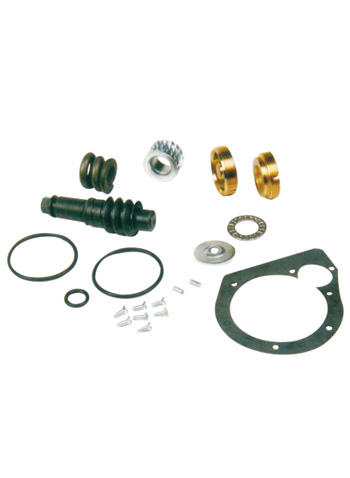 Auto Slack Adjuster Manufacturers, China Auto Slack Adjuster CompanyAs a China Auto Slack Adjuster Manufacturers and Auto Slack Adjuster factory, Zhejiang VOB Technology Co., Ltd. supply wholesale Auto Sla...View Product →
Common Push Rod Problems and Their Symptoms
Because the push rod carries the full brake chamber force, a small wear in the connection becomes a much larger loss at the drum. A worn clevis pin bore of 2 mm can add noticeable stroke and reduce braking torque, which is why the yoke bore, the pin, and the rod threads deserve the same attention as the brake lining.
| Problem | Symptom | Result |
|---|---|---|
| Bent push rod | Visible runout; uneven stroke | Premature diaphragm wear; reduced braking |
| Worn clevis yoke or pin | Clunking when the brake releases | Lost motion; stroke reading climbs |
| Seized adjustment threads | Stroke cannot be changed | Brake may remain partially applied |
| Wrong rod length | Chamber bottoms out | Brake drag and overheated drum |
| Frozen clevis pin | Slow brake release | Unbalanced braking across an axle |
When diagnosing any of these symptoms, compare the complete assembly rather than replacing only the rod. A rod that carries the same part number but mates with a different chamber or slack adjuster will fail again. Checking the full brake chamber assemblies alongside the adjuster connection prevents the mismatch from returning.
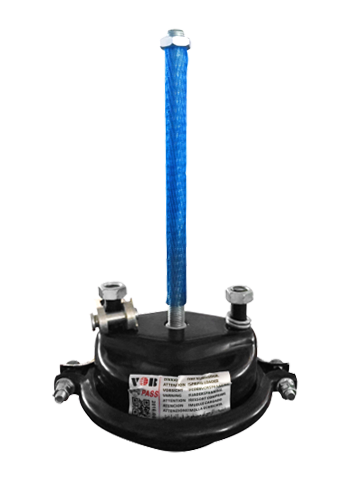 GOOD QUALITY FOR BUS TRAILERS T24 BRAKE CHAMBER Suppliers, Factory - ZheJiang VOZhejiang VOB Technology Co., Ltd is China GOOD QUALITY FOR BUS TRAILERS T24 BRAKE CHAMBER Suppliers and GOOD QUALITY FOR BUS TRAILERS T24...View Product →
How to Measure and Select a Replacement Push Rod
Replacement starts with four measurements: overall rod length from the diaphragm face to the clevis pin center, thread diameter and pitch, clevis yoke opening width, and the brake chamber type. A rod that is too short will not allow enough stroke. A rod that is too long will hold the brake partially applied.
- Chock the wheels and completely drain the air reservoirs.
- Remove the cotter pin and clevis pin that connect the yoke to the slack adjuster arm.
- Measure the rod length and record the thread size and pitch.
- Inspect the yoke bore and the pin for ovality or galling.
- Compare the measurements with the chamber type and the slack adjuster arm length before ordering.
Procurement risk is real. Inexpensive replacement rods may have soft threads that strip during adjustment, a clevis yoke that is not flat, or pins that wear quickly. A manufacturer that controls its own machining and assembly, such as Zhejiang VOB Technology Co., Ltd. with its in-house stamping, die-casting, CNC machining, and assembly lines, can keep the rod, the adjuster, and the chamber within the same tolerance standard. For wheel ends still fitted with manual adjusters, reviewing the manual slack adjuster lineup before buying a rod helps confirm that pin spacing and yoke depth will line up.
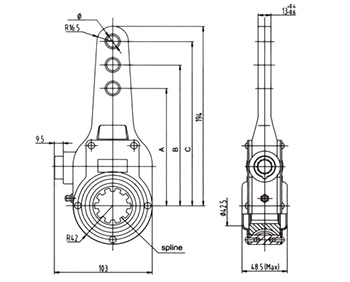 MANUAL SLACK ADJUSTER Suppliers, Factory - ZheJiang VOB Technology CO.,LTD.Zhejiang VOB Technology Co., Ltd is China MANUAL SLACK ADJUSTER Suppliers and MANUAL SLACK ADJUSTER factory.details:View Product →
Installation and Adjustment Tips
- Confirm that the new rod length matches the removed part before assembly.
- Grease the clevis pin and slide it through the yoke and the slack adjuster arm bore.
- Secure the pin with a fresh cotter pin and bend the legs around the yoke.
- Apply the brakes and check that the adjuster arm reaches roughly 90 degrees to the rod.
- Adjust the rod threads in or out until the stroke falls within the limit for the chamber type.
- Release and reapply the brakes several times so an automatic slack adjuster can settle.
- Road test the vehicle and recheck the stroke after the first few stops.
Frequently Asked Questions
What is the difference between a push rod and a slack adjuster?
The push rod is the moving rod that extends from the brake chamber. The slack adjuster is the lever-and-worm assembly splined to the camshaft. The push rod pushes; the slack adjuster converts that push into rotation.
How often should push rod stroke be checked?
Every scheduled brake inspection should include a stroke check, and any brake complaint should trigger one immediately. Automatic slack adjusters still need verification, because a seized adjuster can let stroke climb without a visible warning.
Can an automatic slack adjuster work with any brake chamber?
No. The adjuster must match the chamber size and the camshaft spline. An automatic slack adjuster designed for a Type 20 chamber may not have the correct torque rating for a Type 30 chamber, and the stroke it tries to hold depends on the chamber's operating characteristics.
What causes push rod stroke to increase suddenly?
Sudden stroke growth is usually a mechanical fault, not normal wear. Look for seized S-cam bushings, broken lining material, a bent push rod, or a failed automatic adjuster clutch. All of these create free play that appears as stroke.
How can you tell a push rod is bent?
With the brake released, rotate the rod while watching the clevis yoke. If the yoke moves off-center, the rod is bent. You can also compare stroke across the axle; a bent rod produces an uneven reading on a wheel that otherwise has identical parts.
Keep the Whole Wheel End Within Spec
The slack adjuster push rod is a small part with an oversized job. Its stroke tells you the condition of the chamber, the slack adjuster, and the foundation brake all at once. When the rod, adjuster, and chamber are matched, brakes stay in adjustment longer, inspections are cleaner, and stopping distance stays predictable. For fleets and distributors that want to standardize the wheel end, the complete range of commercial vehicle brake components from the manufacturer behind SHANGHAI FUAO and FAQP covers the chamber, the slack adjuster, and the push rod from a single production facility.

 Contact Us