
 ES
ES EN
EN RU
RU SA
SAA slack adjuster and its pushrod work as one unit in an air brake system: the pushrod carries straight-line force out of the brake chamber, and the slack adjuster converts that force into the rotation that applies the wheel brake. The most important number to track is pushrod stroke, the distance the pushrod moves from its fully released position to full brake application. When the stroke exceeds the legal limit for the installed chamber, the brake is out of adjustment and the vehicle is unsafe to operate. This guide explains how the two parts interact, what stroke limits apply, how to inspect the assembly, and how manual and automatic slack adjusters differ in everyday fleet service.
Content
- 1 What Does a Slack Adjuster and Pushrod Do in an Air Brake System?
- 2 Pushrod Stroke: Definition, Measurement, and Why It Matters
- 3 Pushrod Stroke Limits by Brake Chamber Type
- 4 Manual vs. Automatic Slack Adjusters
- 5 Inspection, Installation, and Common Failure Points
- 6 Choosing Replacement Slack Adjusters, Pushrods, and Chambers
- 7 Frequently Asked Questions
What Does a Slack Adjuster and Pushrod Do in an Air Brake System?
Here is the short version: the pushrod converts air pressure into linear force, and the slack adjuster converts that linear force into camshaft rotation. They must be treated as one linked assembly, because the geometry between them decides whether the brake performs correctly.
In an S-cam drum brake, when the driver presses the brake pedal, compressed air enters the brake chamber and pushes the diaphragm outward. The pushrod extends and swings the slack adjuster through a clevis-and-pin connection. Because the slack adjuster is splined to the camshaft, its rotation turns the S-cam between the brake shoes. The raised cam profile presses both shoes against the drum and slows the vehicle.
Three geometric facts matter for daily maintenance:
- Pushrod stroke decides how far the S-cam rotates. Too little means dragging linings; too much means weak braking.
- Slack adjuster arm length, typically 5 to 6.5 inches, sets the torque multiplication between pushrod and camshaft.
- The angle between the pushrod axis and the adjuster arm at rest should be near 90 degrees; a poor angle distorts stroke readings and reduces brake torque.
Pushrod Stroke: Definition, Measurement, and Why It Matters
Pushrod stroke is the travel distance of the pushrod between its fully released and fully applied positions, measured along the pushrod centerline at full service brake pressure. It is the fastest and most reliable sign of brake adjustment on S-cam drum brakes.
Fleets watch it closely for three reasons:
- As brake linings wear, the shoes travel farther and the pushrod stroke grows.
- An overextended stroke reduces braking force and increases stopping distance.
- Too little stroke usually means dragging brakes, which cause overheating and premature lining wear.
Measure it this way:
- Mark the pushrod at the face of the brake chamber housing with the brakes released.
- Apply full service brake pressure, normally 90 to 100 psi (6.2 to 6.9 bar).
- Hold the pressure steady and mark the pushrod again at the same housing face.
- Measure the distance between the two marks and compare it with the limit for the chamber type.
A ruler, a stroke gauge, or a built-in stroke indicator all work. Always measure at full application pressure with a stable air supply so results are repeatable.
Pushrod Stroke Limits by Brake Chamber Type
Maximum allowable stroke is set by regulation for each chamber size. If any measured stroke is above the value in the table below, the brake must be adjusted or repaired before the vehicle is allowed back on the road.
| Brake Chamber Type | Chamber Outside Diameter | Maximum Pushrod Stroke |
|---|---|---|
| Type 9 | 4-9/16 in (116 mm) | 1-3/8 in (35 mm) |
| Type 12 | 4-13/16 in (122 mm) | 1-3/8 in (35 mm) |
| Type 16 | 5-1/4 in (133 mm) | 1-3/4 in (44 mm) |
| Type 20 | 6-3/8 in (162 mm) | 2 in (51 mm) |
| Type 24 | 6-13/16 in (173 mm) | 2-1/2 in (64 mm) |
| Type 30 | 7-7/16 in (189 mm) | 2-1/2 in (64 mm) |
The chamber type is stamped on the housing or listed on a data plate on most units. The table covers standard clamp-type chambers; long-stroke and specialty chambers use their own ratings, so confirm the limit for the exact model fitted.
Manual vs. Automatic Slack Adjusters
Slack adjusters come in two designs: manual and automatic. Both mount on the same pushrod and camshaft arrangement, but they manage pushrod stroke in opposite ways.
Manual Slack Adjusters
A manual slack adjuster uses a worm gear that a technician turns with a wrench to reset running clearance. It requires periodic adjustment because pushrod stroke grows between services as the linings wear. The correction is simple: turn the adjusting screw until the linings just touch the drum, back off by a quarter to a half turn, and re-check the stroke at full application. Manual adjusters remain common on older trucks and in fleets that want a low-cost, easy-to-understand component.
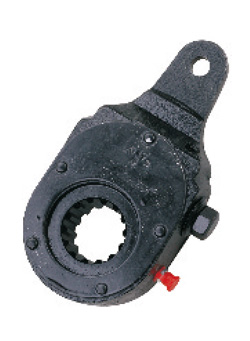 FA9001 Manual Slack Adjuster with 14 Spline TeethThis manual slack adjuster suits older trucks and fleets needing simple, low-cost brake adjustment. Its one-hole front style and 14-tooth spline fit specific applications, making it a straightforward choice when paired with the preceding discussion on manual stroke correction.View Product →
Automatic Slack Adjusters
An automatic slack adjuster uses an internal clutch mechanism that takes up clearance during brake applications. It corrects the stroke continuously as linings wear, so the pushrod stroke stays near its design value without technician action. The common pitfall is manual over-adjustment: operators who treat an automatic unit like a manual one and crank the adjusting screw damage the internal clutch and create a stroke that is far too short, causing dragging brakes. If an automatic slack adjuster shows an overextended stroke, the cause is almost always wear elsewhere, incorrect installation, or a defective unit, not a setting that needs a wrench.
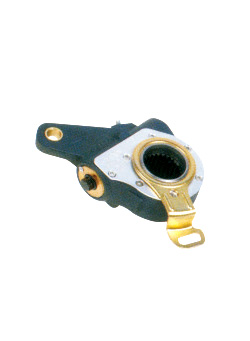 FA23001 Automatic Slack Adjuster for Mercedes TrucksDesigned as a Mercedes application with 26 teeth and a 115mm length, this automatic slack adjuster helps maintain consistent pushrod stroke without manual adjustment. It is relevant here because the text explains why automatic units should not be over-tightened by hand.View Product →
| Consideration | Manual Slack Adjuster | Automatic Slack Adjuster |
|---|---|---|
| Adjustment method | Hand wrench, periodic | Self-adjusting during brake applications |
| Pushrod stroke trend | Grows between adjustments | Stays within design range |
| Maintenance effort | Higher; must check and adjust regularly | Lower; still requires stroke inspection |
| Common mistake | Neglecting the adjustment schedule | Manual over-adjustment that jams the clutch |
| Typical use | Older trucks and simple fleets | Modern trucks, tractors, and trailers |
Inspection, Installation, and Common Failure Points
The quickest way to catch problems early is to combine a stroke measurement with a visual inspection of the pushrod and slack adjuster at every PM cycle.
Inspecting the assembly
- Look for a bent pushrod, which shows up as an angle at the clevis or uneven contact wear at the chamber face.
- Check the clevis pin and the holes in the slack adjuster arm for elongation or looseness; free play here adds false stroke that no adjuster can correct.
- Verify that the slack adjuster is tight on the camshaft splines; a loose adjuster makes a clunking noise and gives erratic stroke readings.
- Look for grease leakage or corrosion on automatic units; a seized clutch can no longer adjust the stroke.
Installation alignment
During replacement, set the pushrod length so the slack adjuster arm sits at an angle of about 90 to 100 degrees to the pushrod when the brakes are released. The clevis holes must line up with the adjuster arm without forcing; prying the parts together preloads the linkage and produces incorrect stroke readings afterward. For automatic units, follow the manufacturer installation procedure, which normally includes a full brake release, a measured initial stroke setting, and an apply-release cycle to seat the internal clutch before the vehicle returns to service.
Choosing Replacement Slack Adjusters, Pushrods, and Chambers
When replacement is necessary, match the chamber stroke and the slack adjuster arm length to the axle rating and brake layout. A mismatch between chamber output and arm length changes the brake balance across the axle, leading to uneven wear and poor stopping behavior.
Key selection criteria:
- Chamber type and rated stroke, matched to the existing bracket and pushrod layout.
- Slack adjuster spline count, typically 10, 28, or 37 splines, and arm length in inches.
- Build quality: forged steel arms and sealed internal components generally last longer than lighter castings with open gears.
- Sensor compatibility if the vehicle uses brake stroke indicators or an electronic brake monitoring system.
Suppliers with a full lineup, including brake chambers, manual and automatic slack adjusters, and connecting hardware, make it easier to keep the whole assembly consistent. A complete commercial vehicle brake system parts range lets you buy the chamber and the adjuster from one source, reducing the risk of mismatched components. If you order a chamber and a slack adjuster together, confirm the pushrod length and clevis pin size so the two parts fit without modification. For reliable replacement parts, browse a trusted range of brake components online.
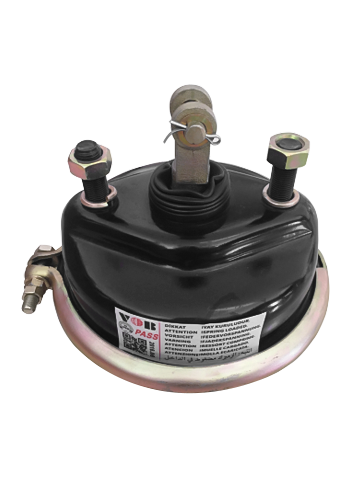 FA1070A Brake Chamber for Commercial Vehicle Brake SystemsThis brake chamber is a key component for complete brake assemblies. The adjacent text emphasizes matching chamber and adjuster specifications, so checking pushrod length and clevis pin size with this chamber is important before installation to avoid component mismatches.View Product →
Frequently Asked Questions
Can you manually adjust an automatic slack adjuster?
No. Automatic slack adjusters are designed to self-adjust; turning the adjusting worm by hand damages the internal one-way clutch and leaves the pushrod stroke incorrectly set. If the stroke is excessive, inspect the camshaft bushings, the clevis pin, and the mounting condition before replacing the unit.
What happens if the pushrod stroke is too long?
The S-cam cannot rotate far enough to press the linings tightly against the drum, so braking force drops and stopping distance grows. The vehicle can also fail a roadside inspection if the stroke exceeds the legal limit for the chamber type.
How often should pushrod stroke be checked?
At minimum, every pre-trip inspection and every scheduled PM. Many fleets combine the stroke check with a tire rotation interval, since both require the wheels to be off for a full lining inspection.
Do air disc brakes use slack adjusters?
No. Air disc brakes use a different actuator with built-in adjustment. Traditional slack adjuster and pushrod assemblies apply only to S-cam drum brakes, which remain the most common type on heavy truck drive axles and trailer axles.
How can you tell if a slack adjuster is already worn out?
Warning signs include pushrod stroke above the limit after correct installation, visible side play between the arm and the camshaft splines, a seized or loose adjusting worm on automatic units, and a loud metallic clunk during a fully braked test application.

 Contact Us